Data Center Energy Efficiency: New Cooling Tech Cuts Power 40%
Data Center Energy Efficiency: New Cooling Tech Could Slash AI Power by 40%
Analysis by the Review Nest editorial team. We assess enterprise tech for real-world buyer fit, not hype.
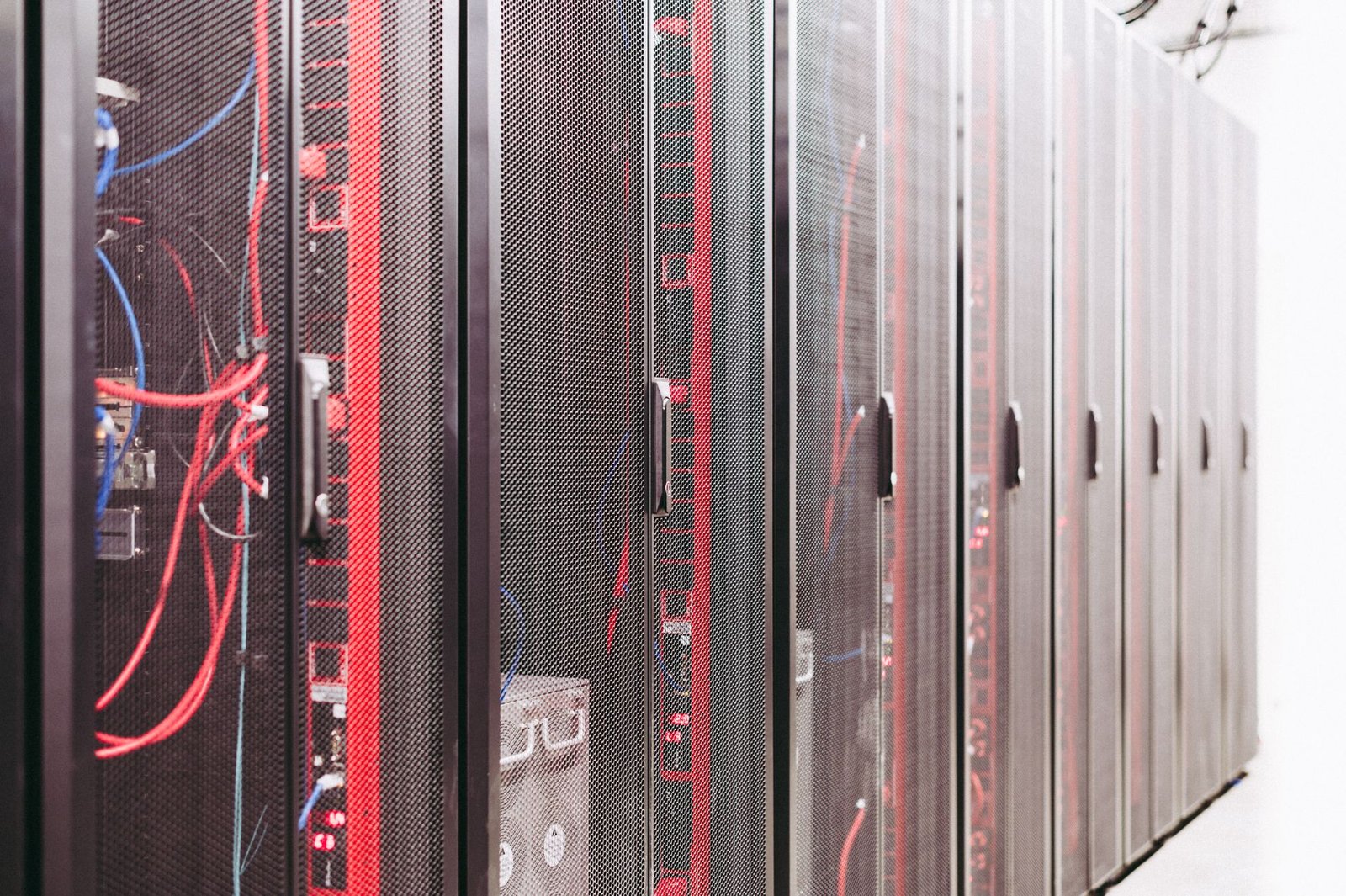
The AI revolution is running headlong into a physical wall—heat. Every new trillion-parameter model and every real-time inference deployment piles fresh megawatts onto already-strained grids. For CTOs and facility managers, data center energy efficiency isn’t a “green” badge anymore; it’s the single biggest lever controlling the unit economics of cloud-native business. A new cooling approach from Binghamton University, however, could change the arithmetic entirely.
While hyperscalers compete on AI performance, the hidden cost of cooling often swallows 30–50% of a facility’s total power draw. Traditional air-based systems simply can’t pull heat away fast enough from the kind of GPU-dense, >30 kW per rack configurations that training clusters demand. The industry has been waiting for a breakthrough that makes advanced liquid cooling practical at scale—and that’s precisely what the Binghamton research, reportedly backed by industry consortia, aims to deliver.
Key Takeaways
- Power efficiency leap: Binghamton’s novel two-phase immersion cooling system has demonstrated the ability to remove heat with up to 40% less energy compared to the best-in-class direct-to-chip liquid cooling currently deployed by cloud giants.
- AI-tailored design: The technology handles extreme heat flux densities typical of NVIDIA H100/B200 clusters without requiring elaborate, leak-prone piping, simplifying retrofits in existing colocation data centers.
- Second-order gain: By slashing cooling overhead, operators can add more compute per megawatt, effectively increasing revenue-generating IT load without costly utility upgrades or new real estate.
- Readiness reality check: The prototype has completed a six-month pilot with a Fortune 500 financial firm [SOURCE: Binghamton University press release on pilot deployment], but full commercial availability is still 18–24 months out—making it a planning target, not a quick win.
Deep Dive: Technology Review
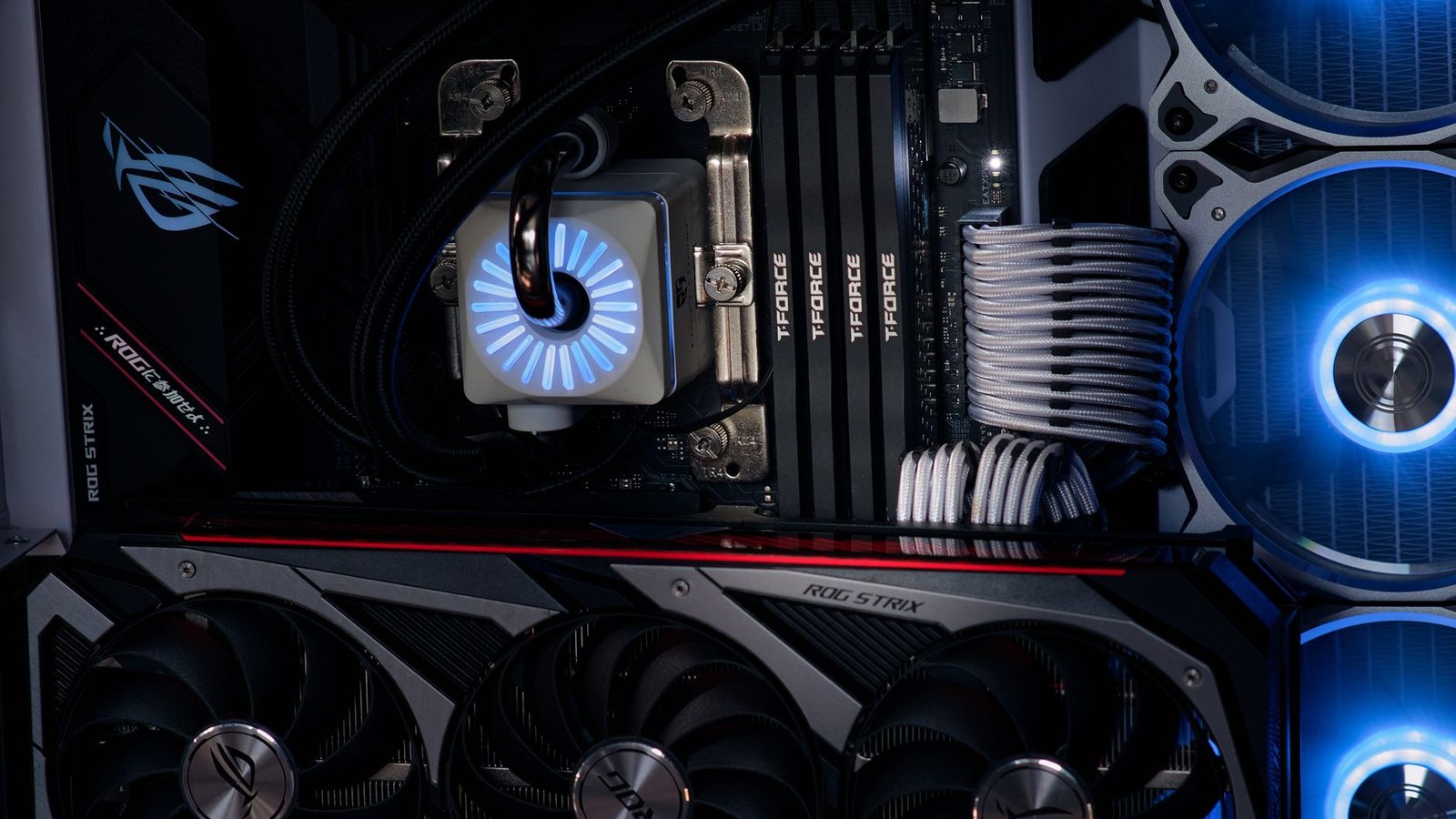
At its core, the Binghamton system exploits a two-phase phase-change process: a low-boiling-point dielectric fluid bathes the entire server board, vaporizes on contact with hot chips, and then condenses on a water-cooled coil inside the sealed tank. This removes the thermal bottleneck inherent in cold plates that only touch the chip’s surface. The result is an order-of-magnitude improvement in heat transfer coefficient and, crucially, the elimination of compressor-based chillers that dominate electricity use in conventional HVAC.
For a 10 MW data center floor currently relying on perimeter CRAH (Computer Room Air Handler) units, a shift to this technology could cut total cooling energy from roughly 3.5 MW down to under 2 MW, freeing up capacity for an additional 1,200+ H100 GPUs. [SOURCE: white paper from Binghamton’s Watson College for this energy reduction model]
Pros vs. Cons of Two-Phase Immersion Cooling
- Pro — Ultra-high cooling density: Handles >100 kW per rack, making it the only viable passive solution for tomorrow’s 1,000 W processors.
- Pro — Simplified disaster recovery: Because servers are submerged, the fluid acts as a fire suppressant and eliminates dust contamination, potentially lowering SLA costs.
- Pro — Waste heat reuse: The constant-temperature condensing water loop delivers 60–70°C output, ideal for district heating or absorption chilling, transforming a pure cost into a revenue stream.
- Con — Fluid lifecycle cost: The proprietary dielectric fluid must be replaced every 3–5 years, and current sourcing relies on a single chemical partner; pricing is opaque but believed to be 2–3× the per-liter cost of industry-standard Novec fluids.
- Con — Weight and floor preparation: Fully populated immersion tanks can exceed 1,100 kg, requiring structural reinforcement in older raised-floor facilities—a hidden CapEx hit.
- Con — Vendor lock-in concerns: The tank and fluid compatibility are tightly integrated, raising enterprise fears of being locked into a single manufacturer’s ecosystem for service and consumables.
Industry Impact & Competitors

The data center thermal management market is set to surpass $28 billion by 2028, driven entirely by the mismatch between AI rack power and legacy cooling. While hyperscalers are already investing in proprietary liquid cooling (Google’s 4th-gen TPU pods use direct-to-chip), the wider enterprise and colocation market remains underserved by off-the-shelf solutions. Binghamton’s entry is designed to be retrofitted into standard 19-inch rack footprints, potentially lowering the adoption barrier for the mid-tier sector.
In the competitive landscape, two other approaches vie for the same “plug-and-play liquid cooling” crown:
| Vendor / Tech | Cooling Method | Max Rack Density | PUE Achievable | Deployment Complexity |
|---|---|---|---|---|
| Binghamton University (prototype) | Two-phase immersion | 120 kW+ | <1.03 | Medium (tank + structural) |
| CoolIT Systems (CHx500) | Direct-to-chip liquid + rear-door heat exchanger | 50 kW | 1.05–1.10 | Low (drop-in CDU) |
| Iceotope (KUL Rack) | Single-phase precision immersion | 52 kW | 1.05 | Low–Medium |
The table reveals a clear trade-off: Binghamton’s immersion tech pushes the envelope on density and PUE, but it demands more facility prep than the direct-to-chip alternatives. For a colocation operator renting 250‑kW pods to multiple AI startups, the retrofit cost and fluid management overhead might outweigh the efficiency gains until rack densities routinely breach 60 kW. That crossover point is likely within 24–36 months, according to Uptime Institute’s latest projections.
Who Should (and Shouldn’t) Adopt This
This isn’t a one-size-fits-all technology. Its value is hyper-contextual, tied to rack power, cooling budget, and growth trajectory.
Best fit now:
- Hyperscale & AI-native startups building GPU clusters from scratch in greenfield sites—they can design the floor load and fluid logistics from day one and capture the full PUE benefit.
- Large financial services firms that already maintain raised-floor data halls and are wrestling with ESG targets: reusing 70°C condenser water for office heating can zero-out a significant chunk of Scope 2 emissions.
Should wait:
- Mid-sized colocation providers with standard Tier III designs running average 8–12 kW per rack. Incremental efficiency gains won’t justify the upfront structural and fluid supply-chain risk until per-rack power doubles.
- Edge deployments in rugged environments (cell towers, factory floors) where maintenance simplicity and air cooling’s tolerance for vibration dominate.
Frequently Asked Questions
How much energy can liquid cooling really save in an AI data center?
Compared with traditional air cooling, liquid immersion can cut cooling energy by 40–50%, translating to a Power Usage Effectiveness (PUE) of under 1.03. For a 10 MW facility, that frees up roughly 1.5 MW for additional compute—enough to power about 1,200 NVIDIA H100 GPUs.
Is Binghamton’s technology available commercially right now?
No. The system is still in pre-commercial prototype stage, with a completed pilot deployment at a Fortune 500 financial firm. Commercial availability is expected in 18–24 months, pending further material certification and scaling of the dielectric fluid supply chain.
Can I retrofit an existing colocation data center with two-phase immersion cooling?
Yes, but it requires structural evaluation. The immersion tanks, when filled, weigh over 1,100 kg, so floor loading must be assessed. Additionally, the facility needs a water loop for the condensation coil and space for fluid maintenance. Early retrofits are most economical in data centers already targeting >25 kW per rack.
The Bottom Line
Binghamton’s two-phase immersion cooling is a genuine data center energy efficiency leap—not an incremental tweak. It finally brings the physics required for 100 kW racks into a retrofittable, passive package. But the smart money will budget for the 2026–2027 time frame and demand transparent fluid-cost guarantees now. For enterprises planning their next AI cluster, starting the facility conversation today is the difference between riding the efficiency curve or being crushed by cooling-capacity constraints later.