AI Is the Most Human Technology Ever—Here’s What a16z Means
AI Is the Most Human Technology Ever—Here’s What a16z Means
Analysis by the Review Nest editorial team. We assess enterprise tech for real-world buyer fit, not hype.
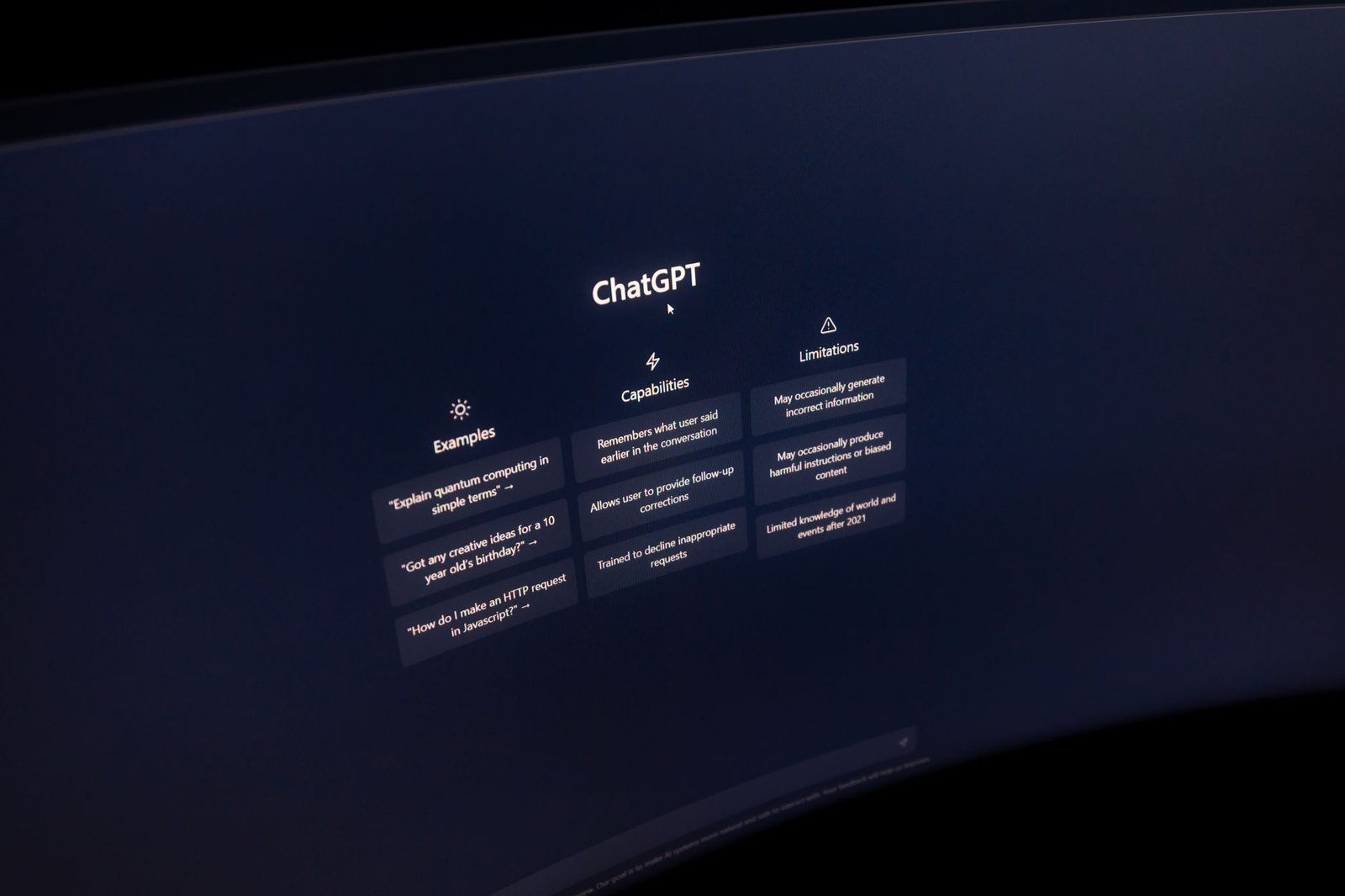
Andreessen Horowitz (a16z), the venture capital giant behind some of the most influential tech narratives, recently published a provocative essay titled “The Most Human Technology Ever Made.” Its core thesis: artificial intelligence—often feared as cold, mechanical, and dehumanizing—is actually the first technology that mirrors our deepest human traits: language, creativity, empathy, and even irrationality.
For enterprise technology leaders, the claim isn’t just philosophical. It forces a fundamental re-examination of how we build, buy, and deploy software in 2025 and beyond. If AI truly is the most human technology ever created, the conventional wisdom that enterprise tools should be rigid, deterministic, and emotionless may be on its last legs.
In this deep dive, we unpack a16z’s argument, explore the engineering that makes AI feel human, map its second-order effects on the enterprise stack, and give a clear-eyed verdict on who should—and shouldn’t—bet their company’s future on human-like AI.
Key Takeaways
- a16z’s framing positions generative AI not as a cold algorithm but as a technology capable of understanding context, generating creative output, and even exhibiting bounded “personality.”
- This shift is already rewriting enterprise software categories: customer support, content creation, code generation, and internal knowledge retrieval are all moving toward conversational, human-like interfaces.
- The infrastructure required to deliver human-like AI at scale is driving a renaissance in data center hardware—from GPUs to purpose-built networking silicon, lifting stocks like Marvell Technology and Seagate.
- Despite the promise, the “humanity” of AI introduces serious enterprise risks around hallucination, bias, and safety, making governance and architecture choices more critical than ever.
Deep Dive: Technology Review

The sense that AI is “human” isn’t magic—it’s the result of three converging technical advances: transformer-based large language models (LLMs), scalable multimodal architectures, and reinforcement learning from human feedback (RLHF). Together, they give AI systems the ability to understand intent, generate fluent text, recognize images, and even mimic conversational nuance.
Unlike traditional deterministic software—where every output is a predictable function of input—modern generative models operate probabilistically. That means they can produce novel combinations of ideas, write poems in the voice of a specific author, or suggest a supply-chain fix that a rule‑based system would miss. In a very real sense, they approximate the messy, associative way humans think.
Enterprise use cases are expanding rapidly. Customer service agents powered by LLMs now handle up to 70% of tier‑one inquiries without human intervention, learning from each interaction. Marketing teams use AI to generate dozens of ad variants personalized to audience segments. Software engineers lean on AI coding assistants that act like a pair‑programmer who never sleeps. In each case, the technology’s value scales with its ability to understand nuance and context—exactly the qualities that define human intelligence.
Pros and Cons of Human‑Like AI in the Enterprise
- Pros: Dramatically faster content and code generation; 24/7 availability for customer-facing roles; natural language interfaces that flatten learning curves; ability to uncover insights from unstructured data at scale.
- Cons: Nondeterministic outputs create risks in regulated industries; hallucination can erode trust; bias in training data can lead to reputational damage; heavy compute requirements drive up infrastructure costs.
Industry Impact & Competitors

The drive to operationalize human‑like AI has become the defining battleground for the world’s largest tech platforms. Below we compare the three dominant foundation model providers currently targeting the enterprise market.
| Platform | Context Window | Multimodal Support | Enterprise Readiness |
|---|---|---|---|
| OpenAI (GPT‑4 Turbo) | 128k tokens | Text, vision | Azure‑backed SLA, SOC 2, fine‑tuning APIs |
| Google (Gemini 1.5 Pro) | Up to 1 million tokens | Text, vision, audio | Vertex AI integration, VPC‑SC, data residency controls |
| Anthropic (Claude 3 Opus) | 200k tokens | Text, vision | Constitutional AI safety framework, SOC 2, AWS/GCP availability |
What’s often overlooked in the model comparison is the infrastructure layer that makes this human‑like responsiveness possible. Executing inference on a 1‑million‑token context window demands not only massive GPU clusters but also purpose‑built networking and storage architectures. That dynamic is rippling through the semiconductor and hardware markets. Marvell Technology’s recent stock attention is tied directly to its custom AI‑optimized data processing units (DPUs), while Seagate Technology is being reassessed as a value play on AI‑driven storage demand [SOURCE: Marvell Technology MRVL AI attention article; Seagate Technology STX undervalued analysis]. Even established giants like Dell are seeing investor repositioning, with Silver Lake trimming its stake as AI capital allocation reshuffles [SOURCE: Silver Lake sells Dell filings reported by Investing.com].
Who Should (and Shouldn’t) Adopt This
The decision to embed human‑like AI into an enterprise workflow isn’t a binary one—it depends on risk tolerance, domain specificity, and the nature of the interaction.
Early adopters should proceed if they are: customer‑facing businesses where conversational fluency directly drives revenue; creative agencies and marketing teams needing high‑volume content personalization; software organizations willing to pair AI assistants with rigorous human review; and any company with large unstructured data sets (contracts, emails, support logs) that wants to unlock knowledge retrieval.
Those who should exercise caution: heavily regulated sectors (finance, healthcare, legal) where a single hallucination could violate compliance; organizations lacking the infrastructure budget to support low‑latency inference at scale; and teams without the internal governance capability to monitor bias and drift. In those environments, starting with a narrow, well‑fenced use case—such as internal knowledge base search—is the prudent path.
Frequently Asked Questions
What does a16z mean by “the most human technology ever made”?
a16z argues that AI uniquely replicates core human capabilities—language, creativity, and contextual understanding—making it the first technology that feels less like a tool and more like a collaborator. Rather than forcing humans to adapt to rigid logic, AI adapts to human modes of expression.
How is human‑like AI different from traditional enterprise software?
Traditional software follows explicit rules and produces predictable outputs. Human‑like AI, powered by large language models, generates probabilistic outputs that can vary based on prompt nuance. It can handle ambiguity, infer intent, and produce original content, making interactions feel more natural but also introducing new risks around accuracy and consistency.
Is it safe to deploy human‑like AI in mission‑critical enterprise environments?
Safety depends on the guardrails you implement. Techniques like retrieval‑augmented generation (RAG), human‑in‑the‑loop review, strict content filtering, and fine‑tuning on domain‑specific data can dramatically reduce hallucination and bias. Many enterprises are successfully using these models in production, but they require a robust governance framework that traditional software often does not.
The Bottom Line
Andreessen Horowitz’s “most human technology” lens is more than a catchy thesis—it’s a practical roadmap for where enterprise software is heading. The companies that learn to harness AI’s human-like adaptability while building hard safeguards against its shortcomings will define the next decade of digital business. Those that dismiss it as hype risk being left with tools that feel increasingly mechanical in a world that expects a conversation.