Nvidia’s AI Future: Why Analysts Are Suddenly Bullish
Nvidia’s AI Future: Why Analysts Are Suddenly Bullish
Analysis by the Review Nest editorial team. We assess enterprise tech for real-world buyer fit, not hype.
A fresh wave of analyst optimism is shining a spotlight on Nvidia — and for good reason. According to a recent roundup from The Globe and Mail, market watchers are turning increasingly bullish on the chipmaker, alongside high‑performance computing specialist Penguin Solutions. [SOURCE: The Globe and Mail analyst note on Nvidia & Penguin Solutions] For enterprise technology buyers, however, the raw stock sentiment only tells half the story. The real question is whether Nvidia’s AI enterprise strategy can sustain the gravity that is pulling the entire industry into its orbit.
Nvidia’s data‑center revenue has exploded on the back of generative AI, and the company now commands a dominant position in the accelerator market. But treating this as a simple monopoly would miss the nuance. Behind the headline bullishness lies a complex interplay of hardware architecture, software lock‑in, supply‑chain timing, and the quiet rise of credible alternatives. CTOs and IT directors evaluating next‑generation AI builds need to look past the ticker symbol and into the silicon.
Key Takeaways
- Analyst enthusiasm centers on Nvidia’s data‑center AI business, not just its consumer GPU legacy. The H100/H200 and upcoming Blackwell platform are seen as must‑have infrastructure for enterprise LLM training and inference.
- CUDA remains a deep competitive moat that forces enterprises to weigh performance against potential vendor lock‑in — a trade‑off that AMD and custom ASIC alternatives are actively attacking.
- The analyst upgrade is also a bet on second‑order effects: cloud providers racing to build AI capacity, sovereign AI clusters, and the industrial metaverse will keep Nvidia’s order book full for years.
- For enterprises, the real risk is not valuation hype but procurement blind spots — ignoring total cost of ownership, integration complexity, and the emerging multi‑vendor AI hardware landscape could prove costly.
Deep Dive: Technology Review
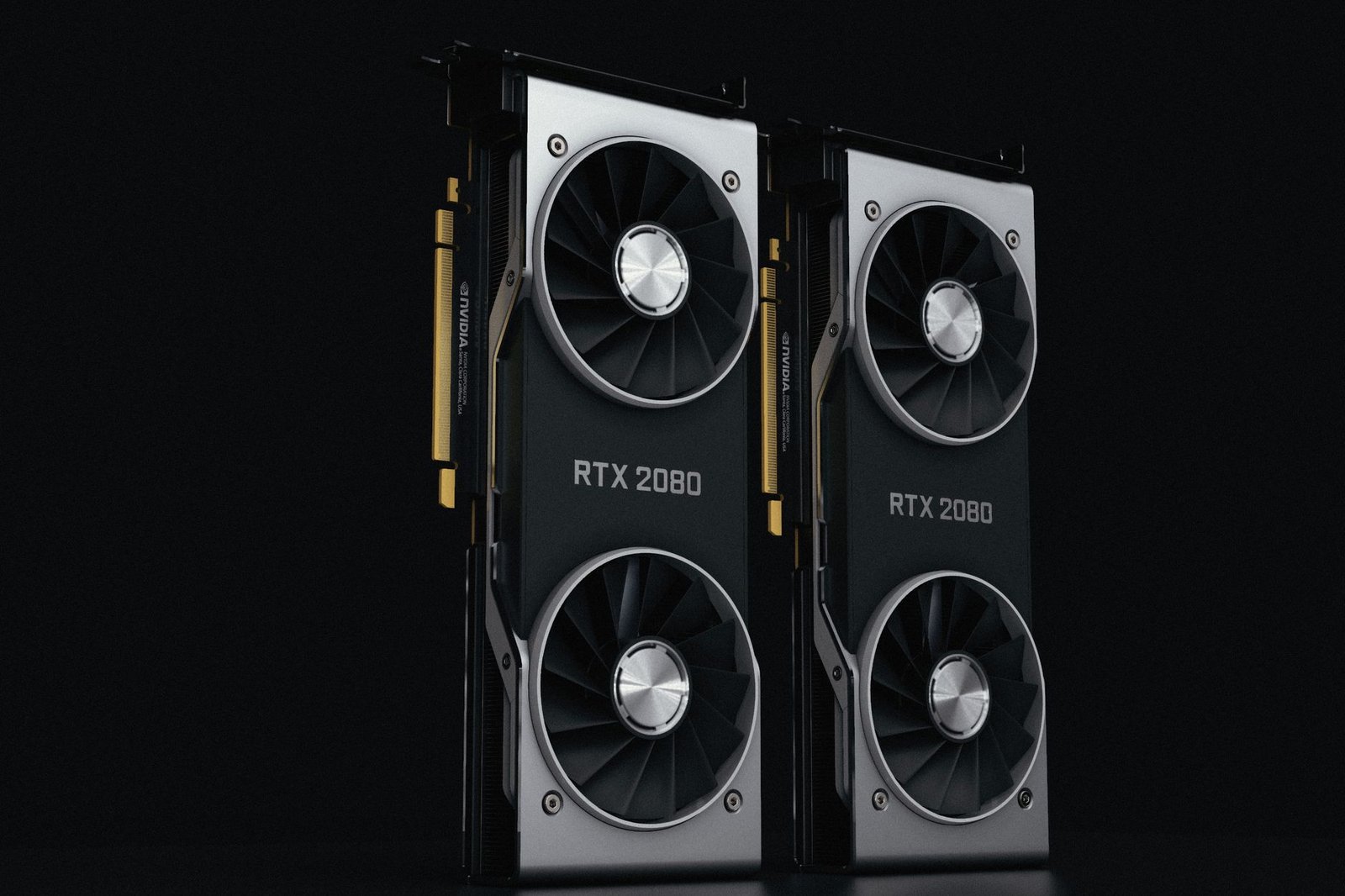
To understand why analysts are pounding the table, start with the silicon. The current‑generation H100 “Hopper” GPU is purpose‑built for transformer models, incorporating a dedicated Transformer Engine that dynamically mixes 8‑bit and 16‑bit floating point precision. In large language model training, this delivers a tangible leap over the prior A100 — typically 2–3× faster throughput on models like GPT‑3 scale, according to Nvidia’s own benchmarks. [SOURCE: Nvidia H100 whitepaper / MLPerf results]
Equally important is the system‑level connectivity. NVLink and NVSwitch glue thousands of GPUs into a single logical accelerator, while InfiniBand and the newer Spectrum‑X Ethernet fabric tie them into massive clusters. For a CIO building a private AI cloud, this tight integration collapses the time from proof‑of‑concept to production — a non‑trivial factor when AI talent is scarce.
But the technology comes with real trade‑offs. Power consumption per H100 can exceed 700W under peak load, forcing data centers to rethink cooling and power distribution. Software lock‑in is another dark cloud: the CUDA ecosystem, while mature, exists only on Nvidia hardware. Porting a trained model pipeline to another accelerator often means a full rewrite, which effectively raises switching costs to the point of no‑return for many enterprises.
Pros and Cons of Nvidia’s AI Enterprise Stack
- Pros: unmatched raw throughput on transformer models, mature CUDA‑X AI libraries, wide OEM and cloud availability (DGX, HGX, and all major CSPs), robust confidential‑computing features in H100, continuous innovation cadence (Blackwell expected in 2025).
- Cons: premium pricing with limited discounting for smaller buyers, extreme power and cooling requirements, ecosystem lock‑in that complicates multi‑vendor strategies, chip‑allocation bottlenecks that can stretch lead times to months.
Industry Impact & Competitors
The analyst bullishness isn’t happening in a vacuum — it’s a direct reflection of how the competitive field is shaping up. While Nvidia still owns around 80% of the AI accelerator market (by units in cloud and enterprise), credible challengers are finally starting to ship. [SOURCE: reputable semiconductor analyst firm market share report] The tension between Nvidia’s incumbency and these insurgents is what makes the current moment so consequential for enterprise buyers.
Below we compare the enterprise‑grade options that a CTO is most likely to evaluate right now.
| Platform | Memory / Interconnect | Software Ecosystem | Strengths | Weaknesses |
|---|---|---|---|---|
| Nvidia H100 / H200 | 80–141 GB HBM3, NVLink + InfiniBand | CUDA, cuDNN, TensorRT — deep & battle‑tested | Best‑in‑class training throughput, widest cloud availability | High cost, lock‑in, power draw |
| AMD Instinct MI300X | 192 GB HBM3, AMD Infinity Fabric | ROCm 6.0 (open‑source, growing but smaller community) | Exceptional memory capacity for inference; aggressive pricing | ROCm maturity lags CUDA on a range of model architectures |
| Intel Gaudi 3 | 128 GB HBM2e, integrated RoCEv2 | OneAPI & Habana SynapseAI, PyTorch integration | Strong cost‑per‑TFLOP, competitive on large‑scale training at lower power | Limited HBM bandwidth vs H200; smaller third‑party toolchain adoption |
AMD’s MI300X is the most direct threat: its memory advantage makes it compelling for inference‑heavy workloads and its server‑OEM support has broadened significantly. Intel’s Gaudi 3, meanwhile, is winning price‑sensitive large‑scale training deals. Yet neither has broken CUDA’s stranglehold on the developer mindshare — and that’s the real reason analysts feel comfortable betting on Nvidia for the next 18–24 months. The moat is cultural as much as it is technical.
Who Should (and Shouldn’t) Adopt This
Not every enterprise needs to ride the Nvidia train without question. The decision should map to your AI maturity, workload type, and long‑term infrastructure philosophy.
Strong fit for Nvidia-first:
- Large enterprises and AI‑native startups that rely on training massive transformer models and need one‑click compatibility with major frameworks. If time‑to‑market is your primary metric, CUDA’s maturity saves weeks of engineering.
- Cloud‑forward organizations using AWS, Azure, or GCP — all three offer Nvidia instances with minimal operational overhead.
- Industries with strict data sovereignty using Nvidia’s confidential computing features (H100’s attested computing environment) to process sensitive data in shared clouds.
Consider alternatives when:
- SMEs or cost‑conscious shops that run mostly inference or fine‑tuning — AMD’s MI300X or even high‑memory CPU instances (e.g., AWS Graviton) can yield better price‑per‑inference.
- Organizations committed to open‑source agility that want to avoid vendor lock‑in at the silicon level. ROCm and OneAPI still require work, but the freedom may be worth the initial friction.
- Environments with power‑density constraints (older co‑location facilities). Nvidia’s thermal footprint can require liquid cooling retrofits that blow out the budget of a small‑scale deployment.
Frequently Asked Questions
Why are analysts suddenly upgrading Nvidia now?
The recent wave of bullish notes ties directly to Nvidia’s data‑center order visibility. Hyperscalers and major enterprises have committed to multi‑year AI build‑outs, and Nvidia’s upcoming Blackwell architecture is expected to widen the performance gap further. Analysts see these committed pipelines as more durable than the typical semiconductor cycle.
Can AMD or Intel realistically challenge Nvidia in enterprise AI?
AMD and Intel are making genuine progress. AMD’s MI300X has won multiple large‑scale inference contracts, and Intel’s Gaudi 3 is competitive on price‑per‑token. However, breaking CUDA’s software ecosystem advantage is a multi‑year project. For the next 12–18 months, most enterprises will likely use a “Nvidia primary, alternative secondary” strategy rather than wholesale substitution.
What should enterprises prioritize when evaluating AI accelerator hardware?
Look beyond peak TOPS. Focus on software ecosystem maturity, total cost of ownership over a three‑year lifecycle (including power, cooling, and engineering effort), integration with your chosen cloud or orchestrator stack, and the availability of trusted third‑party support. Also assess how easily you can port your models if your needs change — lock‑in can quietly become a budget trap.
The Bottom Line
The analyst community is bullish on Nvidia for good reason: the company has stitched together a hardware‑software‑ecosystem fabric that remains the fastest, safest path to enterprise AI production. But the very strength of that position should give IT leaders pause. As alternatives from AMD and Intel mature — and as the industry pours billions into custom ASICs — an all‑in Nvidia bet may be comfortable but not always cost‑optimal. Smart enterprises will treat Nvidia as the benchmark, not the automatic answer, and build the flexibility to pivot when the market – as it inevitably will – starts to rebalance. [SOURCE: latest GPU supply‑chain and vendor roadmaps]