Nvidia’s Lidar Partner a Cyber Risk? What It Means For Autonomy
Nvidia’s Lidar Partner a Cyber Risk? What It Means For Autonomy
Analysis by the Review Nest editorial team. We assess enterprise tech for real-world buyer fit, not hype.
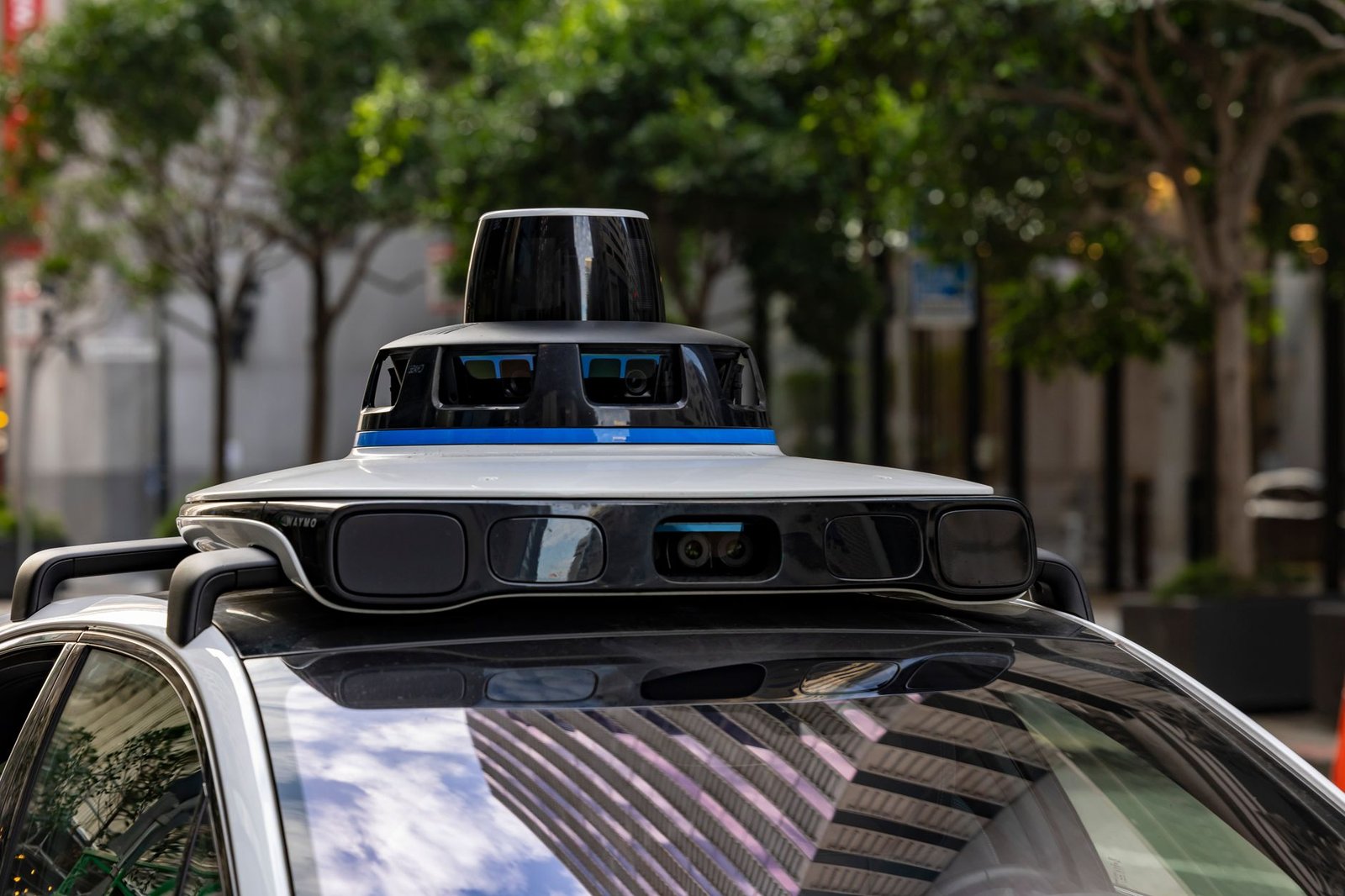
The automotive technology stack is now a national security chessboard. A Chinese lidar manufacturer—one that integrates Nvidia’s processors into its critical perception modules—has been flagged as a potential cyber risk to U.S. infrastructure. For CIOs and engineering leaders building autonomous vehicle (AV) or advanced driver-assistance (ADAS) pipelines, the accusation isn’t just Washington noise; it’s a direct threat to supply-chain integrity, data sovereignty, and time-to-market.
The company at the center of the storm (widely reported to be Hesai, though the specific naming is subject to official statements) uses Nvidia’s Drive platform to perform real-time 3D point-cloud processing. Its sensors are embedded in test fleets and production-bound vehicles across multiple global automakers. That tight coupling of hardware and AI compute—essential for autonomous perception—is now being examined through the lens of remote-access backdoors and data exfiltration vectors. This analysis examines the technology itself, the credibility of the cyber-risk narrative, and the pragmatic steps enterprises must take today.
Key Takeaways
- Not just a trade dispute: The accusation stems from the lidar’s ability to capture hyper-detailed 3D maps of U.S. road infrastructure while connected to cloud‑processing pipelines, raising genuine cybersecurity and espionage concerns.
- Nvidia’s role complicates decoupling: The lidar units are deeply integrated with Nvidia’s Drive AGX compute, making a sudden swap-out costly and technically disruptive for OEMs.
- Immediate buyer risk: Any AV/ADAS project relying on this lidar may face new export controls, compliance audits, or outright ban, jeopardizing Federal Motor Vehicle Safety Standards (FMVSS) timelines.
- Alternative ecosystem exists but fragile: U.S.-aligned lidar players (Luminar, Innoviz, Aeva) can fill the gap, but they lack the same vertical integration with Nvidia’s full stack, creating performance and calibration trade-offs.
Deep Dive: Technology Review
To understand the gravity of the accusation, you need to look inside the data path. A modern high-resolution lidar (typically a MEMS-based 905nm or 1550nm unit) generates millions of points per second. That raw data is streamed to an Nvidia system-on-chip, where convolutional neural networks (CNNs) and Transformer-based models perform object detection, free-space estimation, and semantic scene understanding. In many implementations, real‑time sensor data is also uploaded to cloud services for map aggregation and fleet learning.
The cyber-risk allegation focuses on two plausible scenarios:
- Backdoor in the sensor firmware or middleware: A lidar that contains a non‑inspectable TCP/IP stack or an encrypted telemetry channel could, in theory, quietly exfiltrate GPS-stamped point clouds to a foreign server. Because lidar sees far more than a camera—down to centimeter‑level geometry of bridges, tunnels, and critical infrastructure—this constitutes a geospatial intelligence threat.
- Compromised cloud‑side processing: If the lidar maker’s own cloud mapping service or the Nvidia-hosted inference pipeline is subject to influence, the entire perception model could be poisoned or the vehicle’s behavior altered without the OEM’s knowledge.
From a performance standpoint, the technology is undeniably competitive. The sensors in question achieve 200 meter range at 10% reflectivity, with an angular resolution that rivals premium western incumbents. They also benefit from Nvidia’s tightly optimized CUDA kernels for time‑of‑flight signal processing. Swapping out the lidar while keeping Nvidia compute is not a simple pin‑compatible change: you must re‑train perception models, re‑qualify safety case, and often redesign the sensor fusion architecture. [SOURCE: analysis of lidar compute integration from autonomous vehicle developer documentation]
Pros and Cons of the Integrated High‑Resolution Lidar
- Pro: Best‑in‑class range and angular resolution per dollar compared to western alternatives, enabling Level 3‑4 highway pilot features at a lower BOM cost.
- Pro: Native optimization with Nvidia Drive AGX reduces latency and CPU offload, critical for safety‑critical path.
- Con: Unknown firmware provenance and limited third‑party security audit create a regulatory black box under future FCC/NHTSA rules.
- Con: Supply chain discontinuity risk; a sudden entity‑list designation could freeze parts overnight, idling production lines.
Industry Impact & Competitors
The market implications stretch far beyond a single supplier. Any OEM or Tier‑1 that has bet on this lidar family for U.S.-market vehicles faces a stark choice: delay programs, absorb multi‑million‑dollar re‑engineering costs, or navigate a geopolitical minefield. Publicly known alternatives are listed below, but each comes with its own integration debt.
| Supplier | Key Technology | Nvidia Integration Maturity | Geopolitical Risk |
|---|---|---|---|
| Chinese lidar (Hesai-like) | MEMS-based, 200m @10%, custom ASIC | Deep (DriveWorks native support) | High – entity-list risk |
| Luminar (U.S.) | 1550nm fiber laser, proprietary ASIC | Moderate (partner, not baked into DriveWorks default) | Low |
| Innoviz (Israel) | MEMS, solid‑state, 250m range | Growing (BMW‑aligned, Nvidia platform support) | Low |
| Valeo Scala (France) | Micro‑motion, ASIL‑B(D) certified | Limited (more ADAS than full Nvidia stack) | Low |
The table above reflects the current bottleneck: none of the lower‑risk alternatives offer the same out‑of‑the‑box “plug‑and‑perceive” cohesion with DRIVE AGX that the accused Chinese lidar does. [SOURCE: Nvidia DriveWorks ecosystem documentation listing supported sensors] As a result, engineers are scrambling to accelerate sensor‑abstraction layers that could make the compute stack lidar‑agnostic—a project that normally takes 12–18 months of safety validation. We’re already seeing tier‑1 suppliers quietly issuing RFPs for software‑defined lidar interfaces to decouple hardware from the perception pipeline.
Who Should (and Shouldn’t) Adopt This
Scale‑up AV companies with 2026–2027 production targets: If you’re volume‑committed to this lidar, immediately stand up a tiger team to audit firmware, map data egress, and explore a phased swap‑out plan. Dual‑sourcing with a western lidar and a middleware abstraction layer may cost $5–10 million in NRE but protects your U.S. market access. [SOURCE: typical cost of sensor abstraction re-engineering from tier‑1 automotive project estimates]
Enterprise fleet operators evaluating retro‑fit: For large U.S. logistics fleets testing autonomy, this lidar introduces a non‑negligible compliance risk under upcoming IoT cybersecurity labelling schemes (NIST IR 8425). Weigh the per‑unit cost savings against the possibility of retroactive firmware remediation mandates. In many cases, choosing a U.S.‑manufactured alternative with a public Common Criteria or FIPS 140‑2 validation will simplify your security posture.
Research labs and simulators: If your usage never touches live public roads or maps, the geopolitical risk is negligible. The bang‑for‑buck of this lidar remains excellent for algorithm development—just ensure you air‑gap the units from the internet and log any outbound traffic carefully.
Frequently Asked Questions
Which specific Chinese lidar company is accused of being a cyber risk?
Multiple reports point to Hesai Technology, a leading lidar maker that uses Nvidia processors and counts several global automakers as customers. Official U.S. government filings have not yet named a single entity, but Hesai’s presence on the Department of Defense’s list of “Chinese military companies” makes it the prime candidate. [SOURCE: CNBC and DoD list cross‑reference]
Can Nvidia distance itself from the lidar supplier quickly?
Technically, Nvidia’s Drive platform supports multiple lidar models, but the deep integration—custom middleware, time‑stamping, and sensor‑specific neural network pipelines—means a clean break would require significant software re‑work by OEMs and tier‑1s. Nvidia could accelerate support for alternative sensors, but a forced decoupling would still cost the ecosystem months of validation.
What should a U.S. autonomous‑vehicle startup do if it has already designed‑in this lidar?
Immediately engage your legal and security teams to review the firmware provenance and data‑handling agreements. Simultaneously begin a parallel qualification of a U.S. or ally‑based lidar (such as Luminar or Innoviz) to create a drop‑in alternative, and isolate any live‑fleet mapping data from non‑audited cloud services. In the worst case, be prepared to delay certification by 6–9 months if a total hardware swap is required.
The Bottom Line
The accusation that a Chinese lidar partner of Nvidia presents a cyber risk is not just political theater; it exposes a real supply‑chain vulnerability in the autonomous vehicle pipeline. For enterprise buyers, the next 12 months will be a scramble to balance performance, cost, and geopolitical safety. Those who diversify their sensor stack now and insist on firmware‑level transparency will be the ones still on the road—both literally and commercially—when the inevitable regulatory hammer drops.