SpaceX’s Orbital Data Centers: The Killer Cloud Advantage
SpaceX’s Orbital Data Centers: The Killer Cloud Advantage
Analysis by the Review Nest editorial team. We assess enterprise tech for real-world buyer fit, not hype.
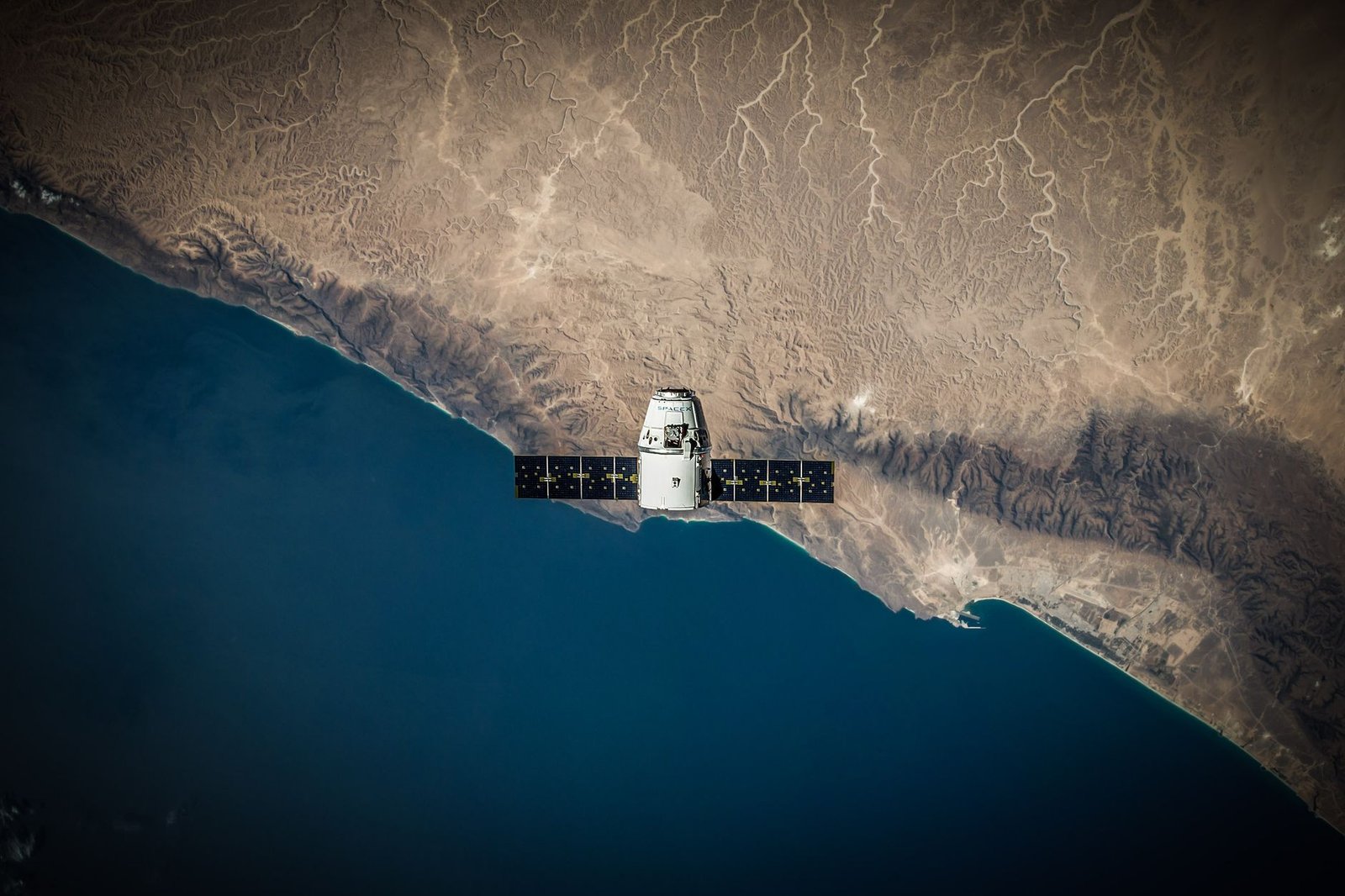
SpaceX isn’t just launching satellites to beam internet from space—it may be poised to build data centers that float above the cloud. According to recent reports [SOURCE: CNBC report on SpaceX orbital data center plans], the company is racing to deploy compute and storage capabilities in low Earth orbit (LEO). For enterprise leaders, this isn’t a sci‑fi fantasy; it’s a potential paradigm shift that could reshape latency budgets, sovereignty rules, and the very location of critical infrastructure. In this analysis, we strip away the headlines and examine what orbital data centers really mean for B2B buyers, CTOs, and IT strategists who live and breathe distributed architectures.
Why now? Three forces are converging: SpaceX’s Starlink constellation provides a ready‑made, laser‑interconnected mesh in space; the rise of edge computing demands processing closer to users across the globe; and national security imperatives are pushing sensitive workloads beyond reach of physical seizure. The result is a credible, if nascent, business case for moving server racks a few hundred miles straight up.
Key Takeaways
- Orbital data centers could cut intercontinental latency by up to 50% compared to subsea fiber, transforming financial trading, real‑time gaming, and global IoT.
- Jam‑proof laser inter‑satellite links and physical isolation in space introduce a new layer of security for sensitive government, defense, and enterprise data.
- Staggering launch costs and severe thermal management challenges mean adoption will be limited to specific, high‑value use cases for the next five years—not a mass‑market cloud replacement.
- SpaceX’s vertical integration (Starship for cheap launches, Starlink for networking) gives it an unmatchable cost advantage, potentially forcing hyperscalers to lease capacity or partner.
Deep Dive: Technology Review

Orbital data centers aren’t repurposed satellite payloads strapped with fans. The engineering is radically different from a terrestrial hyperscale facility. A usable orbital compute node must solve four hard problems simultaneously: power, cooling, radiation hardening, and fault‑tolerant networking.
Power and Cooling in a Vacuum. In LEO, a satellite basks in sunlight for about 45‑60 minutes per orbit, making solar arrays the primary power source. A commercial‑grade data center rack draws 5–15 kW; an orbital node would need to generate that via large, deployable photovoltaic panels. SpaceX’s Starship—designed to carry 100+ tons to LEO—makes launching such heavy payloads economically thinkable. As for cooling, the vacuum of space eliminates the need for air‑based chillers. Instead, waste heat must be radiated away passively through large radiators. This is both an advantage (no cooling electricity) and a constraint: radiator area scales with power dissipation, limiting compute density. Early designs will likely favor low‑power ARM or RISC‑V processors over power‑hungry GPUs, unless a breakthrough in radiative cooling emerges [SOURCE: technical paper on space radiator efficiency for high‑performance compute].
Radiation Shielding. LEO is protected to some extent by Earth’s magnetic field, but memory errors from high‑energy particles remain a real problem. Orbital servers will demand radiation‑hardened memory, error‑correction coding, and possibly redundant triplicate voting logic to prevent silent data corruption. This inflates cost per compute unit but is a solved challenge for aerospace. Some startups are experimenting with shielding using water or polyethylene panels integrated into the module wall, while SpaceX may leverage its reusable Starship to replace servers frequently—turning a hardware reliability problem into a logistics operation.
Laser Inter‑satellite Links. Starlink’s biggest differentiator is its space‑based optical mesh. Data centers onboard select satellites could offload compute tasks and route results to Earth via any satellite within the mesh, choosing the shortest path to the customer. This enables new latency‑sensitive architectures: imagine a trading algorithm running on a satellite that passes directly over Chicago and London during the same orbit, bypassing transatlantic cables. SpaceX reportedly is testing 100+ Gbps inter‑satellite laser links, which would be foundational for distributed orbital compute [SOURCE: SpaceX Starlink laser link testing data].
Pros and Cons at a Glance:
- Pros: Sub‑20ms global latency for select city pairs; physical immunity to on‑ground disasters, tornadoes, and cable cuts; potential for “data sovereignty in orbit” as no single nation controls the hardware; ability to tap unlimited solar power without a grid.
- Cons: Exorbitant per‑rack launch cost (though dropping); limited compute density due to thermal radiator constraints; hard to physically repair; regulatory maze over spectrum and orbital slots; reliance on a single vendor (SpaceX) creates near‑total dependency.
Industry Impact & Competitors
If SpaceX succeeds, it won’t be alone for long. The market for space‑based compute is already attracting serious players, each with a different approach. The table below contrasts the current known initiatives and their positioning.

| Initiative | Approach | Latency Advantage | Key Differentiator |
|---|---|---|---|
| SpaceX Orbital DC | Dedicated compute modules in LEO, interconnected via Starlink | Very low (~5-15ms regional, sub-30ms intercontinental) | Cheapest launch (Starship); fully owned network |
| AWS Ground Station / Azure Orbital | Ground‑based satellite data ingestion, no compute in space | None (gateway adds latency) | Seamless integration with existing cloud workflows |
| OrbitsEdge (formerly) | Satellite‑agnostic data center‑in‑a‑box for LEO | Similar to SpaceX but hitching rides on any launcher | Vendor‑neutral, but limited scale and no mesh network |
The hyperscalers—AWS, Microsoft, Google—currently focus on connecting satellites to Earth rather than putting servers in orbit. This preserves their business model of centralized cloud regions. However, if SpaceX demonstrates a performance advantage that attracts high‑frequency traders or global CDNs, expect at least one cloud giant to announce a co‑development partnership with a satellite operator to place bare‑metal compute in orbit. Microsoft already has a partnership with SpaceX for Azure Space; an “Azure Orbital Compute” service is a logical next step. The real competition will be between vertical integrators (SpaceX) and the cloud aggregators who could abstract away the hardware and sell orbital cycles as part of their edge portfolios.
From a regulatory angle, the International Telecommunication Union (ITU) and national governments have yet to craft rules for data processed in space. Questions of applicable law (whose data privacy regime governs a server over international waters?) could slow adoption for regulated industries like healthcare and finance until frameworks emerge.
Who Should (and Shouldn’t) Adopt This
Orbital data centers won’t be a general‑purpose cloud tier anytime soon. Buyer fit depends entirely on whether the extreme physics of LEO aligns with a company’s latency, sovereignty, or security requirements.
Strong candidates for early adoption:
- High‑frequency trading firms and exchanges: The premium on a slew of milliseconds over transatlantic routes justifies almost any cost. A trading algorithm co‑located on a satellite with laser paths to Chicago and London could capture arbitrage windows that fiber‑bound competitors miss.
- Global content delivery networks (CDNs): By caching video or gaming content on orbital nodes, CDNs could serve users in underserved regions with sub‑20ms latency, without building ground infrastructure in unstable areas.
- Military and intelligence agencies: Data housed in space is far more difficult to physically seize or wiretap, offering a new tier of classified workload protection. DARPA has explored similar concepts [SOURCE: DARPA solicitations for space‑based processing].
- IoT aggregators in remote areas: Oil rigs, maritime shipping, and polar research stations could aggregate sensor data locally on an overhead satellite, drastically reducing backhaul costs.
Who should wait:
- SaaS providers with standard web apps: Your latency needs don’t require space. Cloud regions on Earth are far more cost‑effective and maintain compatibility with existing toolchains.
- Organizations with strict hardware ownership or audit requirements: Until there’s a way to physically inspect, replace, or certify an orbital server, highly regulated sectors like banking (for core banking) will resist.
- Startups without aerospace-hardware negotiating power: Early access will likely come through deeply integrated partnership agreements with SpaceX, not a self‑service portal. Unless you’re a strategic anchor tenant, expect long lead times.
Frequently Asked Questions
Are orbital data centers really feasible with current rocket technology?
Yes, the physics is solid, but the economics rely on SpaceX’s Starship reaching its promised cost target of ~$10 per kilogram to orbit. At that price, launching a fully built‑out 10‑rack data center module becomes comparable to the capital cost of a new terrestrial edge data center in a major metro. Without that, the project remains a niche experiment. Starship has yet to achieve orbital flight and full reusability, so the feasibility remains dependent on a successful test campaign [SOURCE: SpaceX Starship development milestones].
How much lower will the latency be versus fiber?
For intercontinental routes, a direct laser path in vacuum can deliver 30–40% lower latency. For example, a London‑to‑New York round trip currently hovers around 70ms via the fastest transatlantic cables. An orbital hop using laser inter‑satellite links could shrink that to 45–50ms. However, last‑mile ground relays still add delay; true user‑to‑satellite‑to‑user systems need low‑Earth orbit gateways close to end users.
What happens to the data if a satellite fails or re-enters?
Data replication across multiple satellites in the constellation and downlinks to ground‑based storage will be essential. A failed node would likely burn up in the atmosphere, but data can be proactively offloaded to peers. SpaceX’s Starlink already uses inter‑satellite links, so a mesh replication protocol is an extension of that capability. For truly sensitive data, customers would likely add end‑to‑end encryption and possibly keep only ephemeral processing in orbit with all state persisted on the ground.
The Bottom Line
SpaceX’s orbital data center ambitions are credible, but they are a bet on Starship’s reusability, not a near‑term threat to AWS or Azure. For the few verticals where every millisecond is worth a fortune and physical sovereignty is priceless, the technology could be a game‑changer. For most enterprise IT teams, it’s an intriguing signal of where cloud architecture is heading, not a deployment plan. The smart move is to watch the test launches, build optionality into edge architectures, and be ready to run a pilot when the first commercial orbital capacity comes online—likely first for defense, then for finance.